
Don’t Hide In The Shadows.
Why unclear statements lead to very clear misunderstandings.
Intro
It rarely starts with an open conflict. Most of the time, it begins quietly. With a sentence that sounds harmless, almost polite. “Maybe we could take a look at that.” Or: “I thought you would take care of that.” Similarly: “We should really talk about that.” In situations like these, no one disagrees. Nobody raises their voice. But there’s still something left behind: a nagging feeling of unease and a dull sense of disappointment. Later, both sides feel that something wasn’t quite right, but without being able to pinpoint exactly why. In these cases, the problem isn’t what was said. The problem is what wasn’t said.
What Science Says
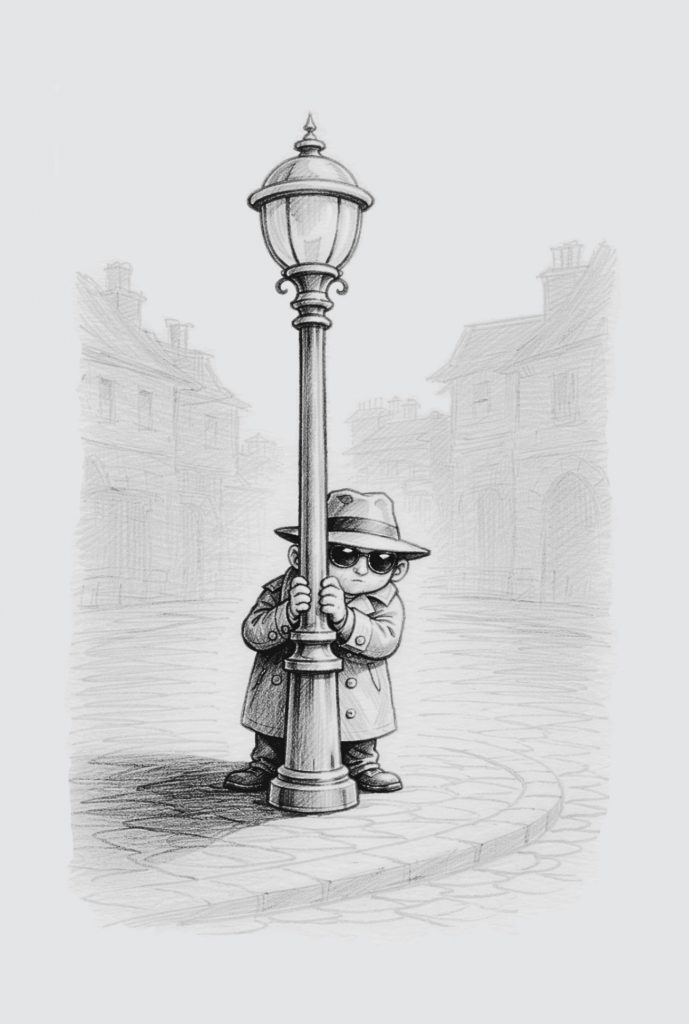
Such sentences are known as shadow sentences: statements that express wants or judgments without stating them directly. Shadow sentences let us speak without fully committing. They seem careful, sensible, and willing to work together. But in reality, they create ambiguity rather than clarity. We hide our intentions in the shadows and then wonder why our counterpart has not recognized them.
Communication research has long shown that how we say things is as important as what we say. As early as 1975, experts said that effective communication depends on clarity, relevance, and sufficient information. If these principles are violated – for example, through vagueness or indirect hints – the other person has to interpret what is said, and interpretations are rarely clear. Current research confirms this. The results of a 2025 study showed that indirect descriptions encourage atypical conclusions. When a speaker is unclear, listeners fill in the gaps with assumptions, often incorrect ones. Another study from 2022 found that indirect language creates psychological distance. The more indirectly a statement is formulated, the less responsibility it signals. Shadow sentences send a hidden message: I have some thoughts on the matter, but I don’t fully stand behind it.
This pattern becomes particularly problematic with sentences like “I thought you would…” or “I expected that in this situation you could…”. Statements like these are vague and judgmental. People expect certain things, and they get a little disappointed when those things don’t happen, but they don’t say that directly. The result is not clarity, but usually defensiveness.
In contrast, clear language can create transparency and efficiency. Yes, it may seem unfamiliar to people who prefer indirect styles. But being polite and clear are not opposites. Tone is a matter of attitude, not vagueness. A 2017 study showed that direct, respectful communication in conflicts promotes more stable relationships in the long term than indirect or avoidant styles. Indirectness may be socially acceptable and feel safe in the short term, but in the long run it undermines trust. Even if indirect communication is intended to preserve harmony, it often creates frustration and misunderstandings – especially when tasks, roles, or expectations are involved.
Small Change
To avoid this, simply bring a little more clarity to your communication. In your next conversation, pay attention to your own words. If you catch yourself using a shadow sentence, take a step back from it: Replace your vague statement with specific requests or decisions. For example, instead of saying, “I thought you would take care of that,” ask, “Can you please take care of that?” Instead of vaguely saying, “We should talk about that sometime,” say, “I’d like to clarify this today.” If someone uses a shadow sentence in a conversation with you, ask calmly and directly, without reproach, “What exactly do you mean?” or “What specifically do you want from me?” It’s not about being rude or harsh. It’s about being precise.
Compounding Effect
The effect of this small change unfolds gradually. Your conversations will become clearer, expectations will align more quickly, and misunderstandings will become less frequent. You and your counterpart will feel better understood in every conversation. Over time, others will see you as someone who is reliable, fair, and transparent. Trust grows when people can read and understand you, with fewer follow-up questions, less unspoken irritation and more shared reality.
Let’s try it!
Using direct language requires courage, especially when it makes you stand out in sensitive situations. But if you use clear language, you can influence others without manipulating them and create harmony without ambiguity.
Say what you mean. Ask for what you need. Be clear. Be friendly. Be straightforward. Don’t hide in the shadows. Being clear is not the same as being confrontational. It is respect made visible.
During your conversations don’t forget that a simple smile can transform your interactions, and that calling people by their name can make a big difference.
For a deeper insight:
Joyce, C. (2012). The impact of direct and indirect communication.