
Just Start – Motivation Follows Action.
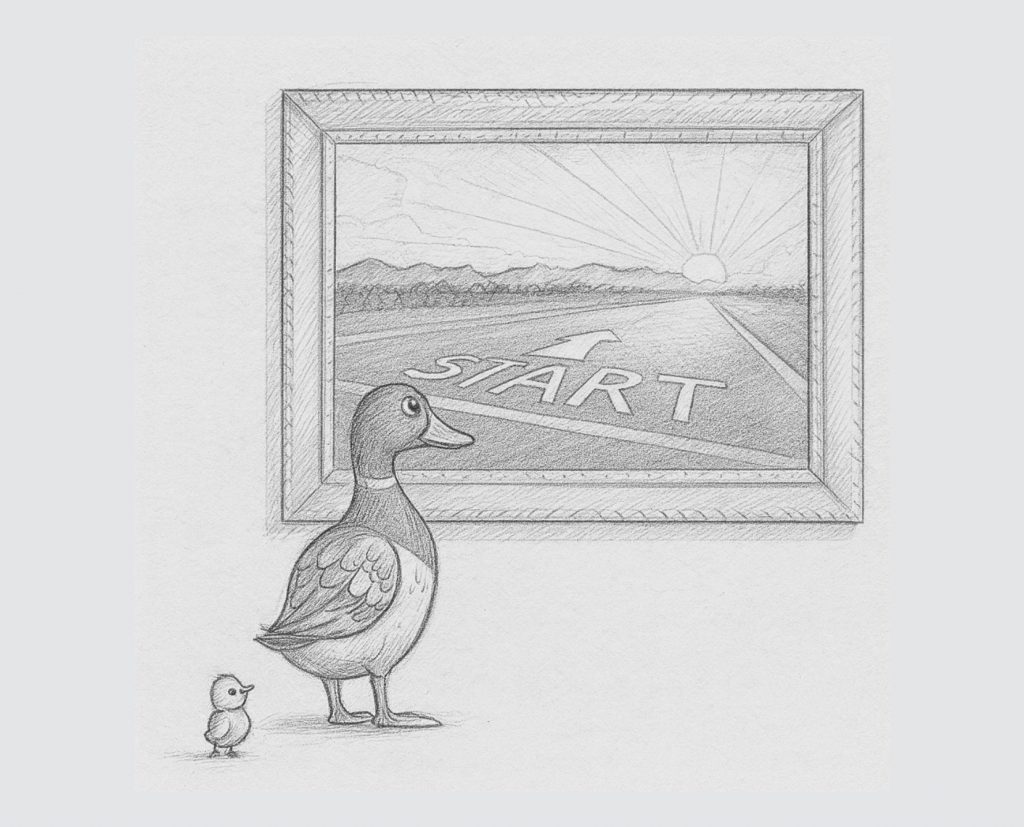
How 120 seconds can transform your productivity.
Intro
Do you know that feeling when you’re faced with a task but just can’t get started? Time is slipping away, your deadline is approaching, and yet you still can’t find the motivation. You know you should start, but the thought of the effort ahead makes you hesitate. Instead, you do the easy tasks that require less effort. However, the key lies precisely in this: the biggest challenge is not the task itself, but the first step.
What Science Says
Research shows that the biggest obstacle to starting a task is often not a lack of motivation, but rather the effort we believe it requires involved. One study from 1999 showed we often invest more energy into avoiding a task than into doing it, causing us to overestimate how demanding it actually is. As soon as we take the first steps, our perception changes, as does our motivation. A 2018 study on the concept of the “effort paradox” came to similar conclusions. It found that, although we perceive effort as stressful, we can also see it as a source of appreciation and fulfillment once we start. The initial inhibition dissipates as soon as we begin. This process, which connects the stages of hesitation and action, is crucial for habit formation and task completion.
This aligns with findings from a study conducted in 2015. Five experiments revealed that people approach tasks with more energy, particularly during so called new beginnings. The timing of when an action starts plays an important role in motivation. Therefore, it is less about the moment of highest motivation and more about the conscious decision to start the task in order to take advantage of the feeling of a new beginning and its momentum-supporting effect. A 2010 study and a 2018 analysis support these findings. Their data shows that habit formation is less about an intense desire for change and more about simplifying the entry point. Once we take the first step, we are more likely to continue.
Small Change
So, how can you overcome the barrier to getting started? The answer is simple: Turn the above insights into small, everyday actions. The next time you hesitate to begin a task, set a timer for two minutes. During this time, take a small action that’s easy and doesn’t require much effort. This could mean getting your workspace ready, opening a file or document, or writing down an initial idea or solution. The goal of these 120 seconds is to keep the effort minimal and unobtrusive. Once you take the first steps, motivation will follow automatically, and momentum gets the chance to take over.
Compounding Effect
The more consistently you apply this small change, the easier starting becomes. Your brain will begin to associate starting with ease rather than resistance. The gap between hesitation and action will get smaller, and the feeling of overcoming yourself will gradually become a habit. This aligns with the results from a 2021 study. The study data showed that positive behaviors become stronger the more often they are performed. This compounding effect reinforces itself, making you increasingly motivated to continue and complete your tasks.
Let’s try it!
Imagine you’re facing a big task again and feel yourself hesitating. This time, though, you know what to do. It only takes 120 seconds. Take one small step, the resistance fades almost instantly. As the seconds pass by the task feels lighter and your motivation grows more and more. You’ve started, that’s what counts. The rest follows naturally.
A simple glass of water can give your productivity a nice boost too! Find out here how a glass of water is more than just a fuel for the day ahead.
For a deeper insight:
Wood, W., et al. (2021). Habits and goals in human behavior: Separate but interacting systems.
Inzlicht, M., et al. (2018). The effort paradox: Effort is both costly and valued.
Leave a Reply